Fact sheet
Quartz diorite, Cartridge Pass pluton border phase
Hornblende-biotite, quartz diorite of the border of the Cartridge Pass pluton, eastern Sierra Nevada batholith. The sample was collected on the east side of an unnamed lake, approximately 1.5 km N of Lake Basin, by James G. Moore of the U.S. Geological Survey in 1956 or 1957 (Moore, J.G. written communication) during the final stages of mapping of the Mount Pinchot quadrangle west of Independence, California. Moore (1963) reported pronounced compositional zoning in the pluton: a darker, border zone with abundant mafic minerals transitioned to a low color index (< 5% mafic minerals) interior. This rock was one of five representative samples in the pluton selected by Dodge and Moore (1968) for detailed study. They analyzed whole rock geochemistry, mineral modes, and biotite compositions to assess magma redox chemistry across the pluton. A Cretaceous K-Ar age was reported for the pluton by Dodge and Moore (1968).
View 1 features a composite grain with a strongly pleochroic, brown, oval allanite core, overgrown by colourless epidote with bright blue interference colours. A further, minor overgrowth of epidote is pleochroic in shades of yellow, with much higher order interference colours. The whole composite grain is mantled by biotite. Small crystals of apatite are also present.
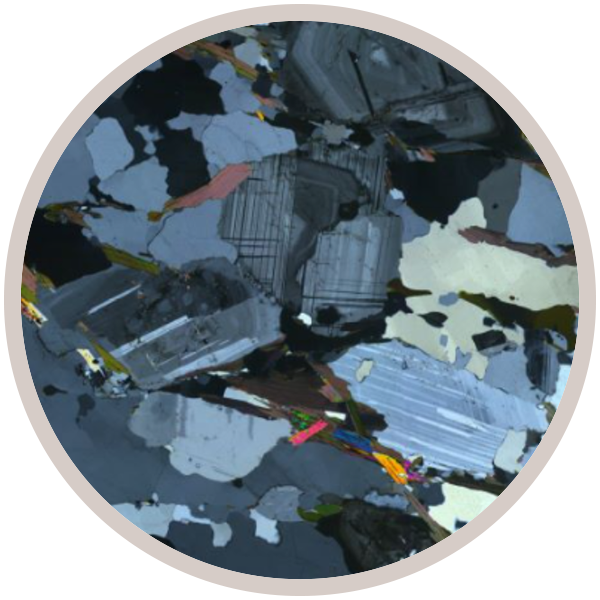
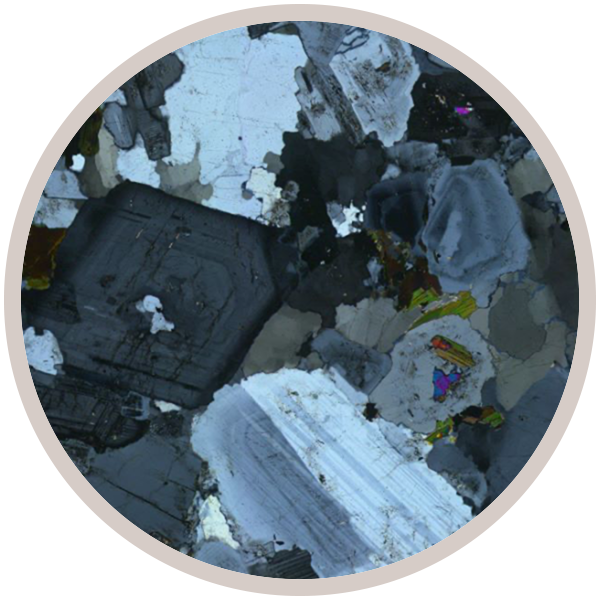
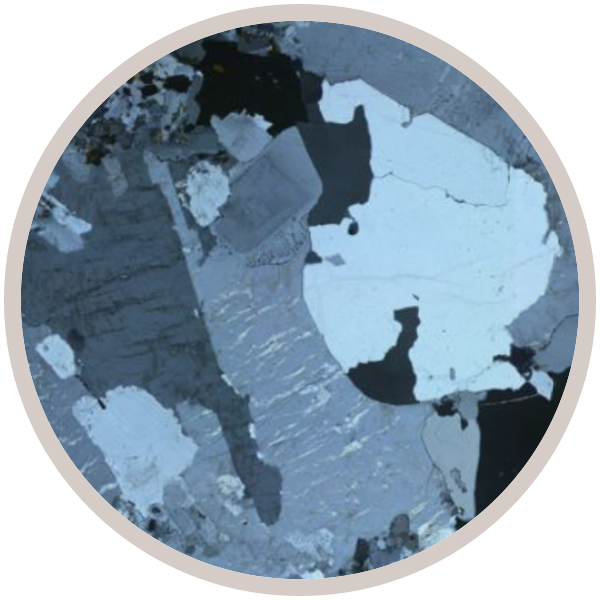
In View 2, a large, tabular plagioclase crystal displaying clear zoning and twinning is surrounded by quartz and K-feldspar grains, the latter containing numerous smaller chadacrysts of twinned plagioclase. Also present are numerous biotite and hornblende grains.
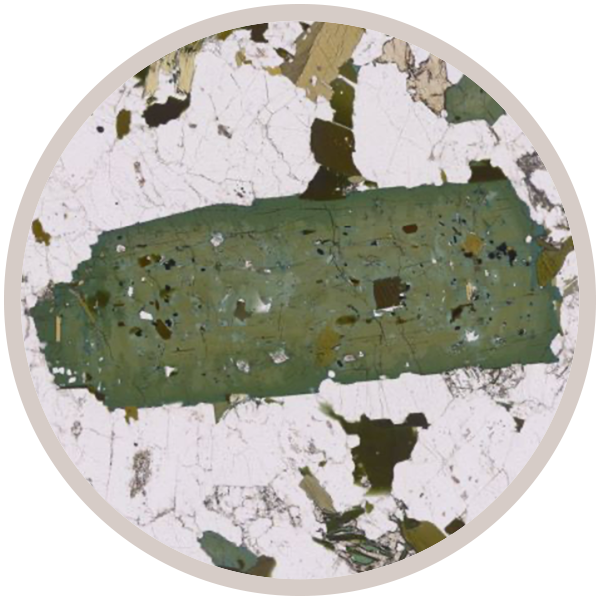
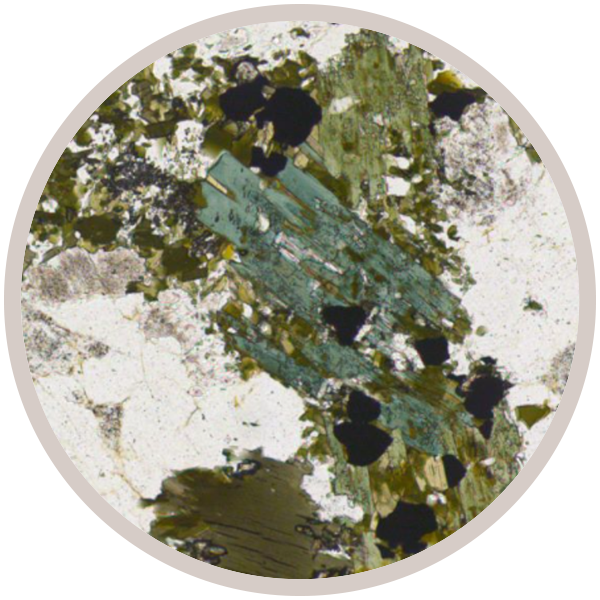
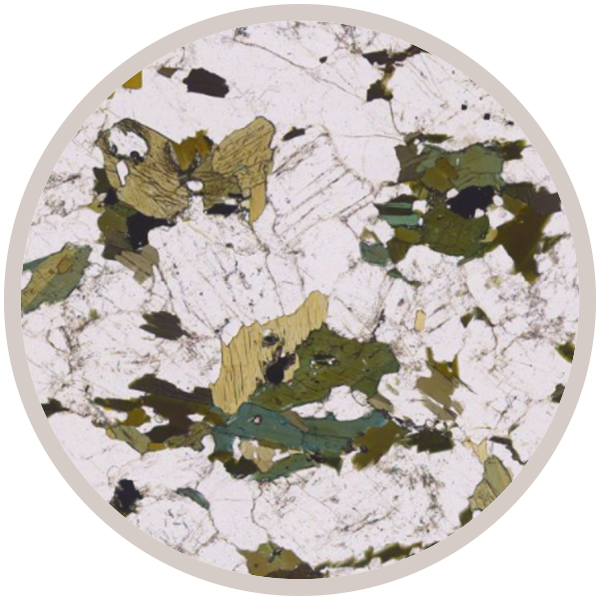
View 3 contains a large, pleochroic hornblende crystal with a single lamellar twin. The amphibole has numerous inclusions of quartz and feldspar. There are also several small biotite laths, oriented parallel to the length of the hornblende, which appear to indicate replacement of the amphibole by mica.
References
Dodge, F.C.W., and Moore, J.G., 1968, Occurrence and composition of biotites from the Cartridge Pass Pluton of the Sierra Nevada Batholith, California. U.S. Geological Survey Professional Paper 600-B, p. B6–B10.
Moore, J.G., 1963, Geology of the Mount Pinchot quadrangle, southern Sierra Nevada, California. U.S. Geological Survey Bulletin, v. 1130, 152 pp.